

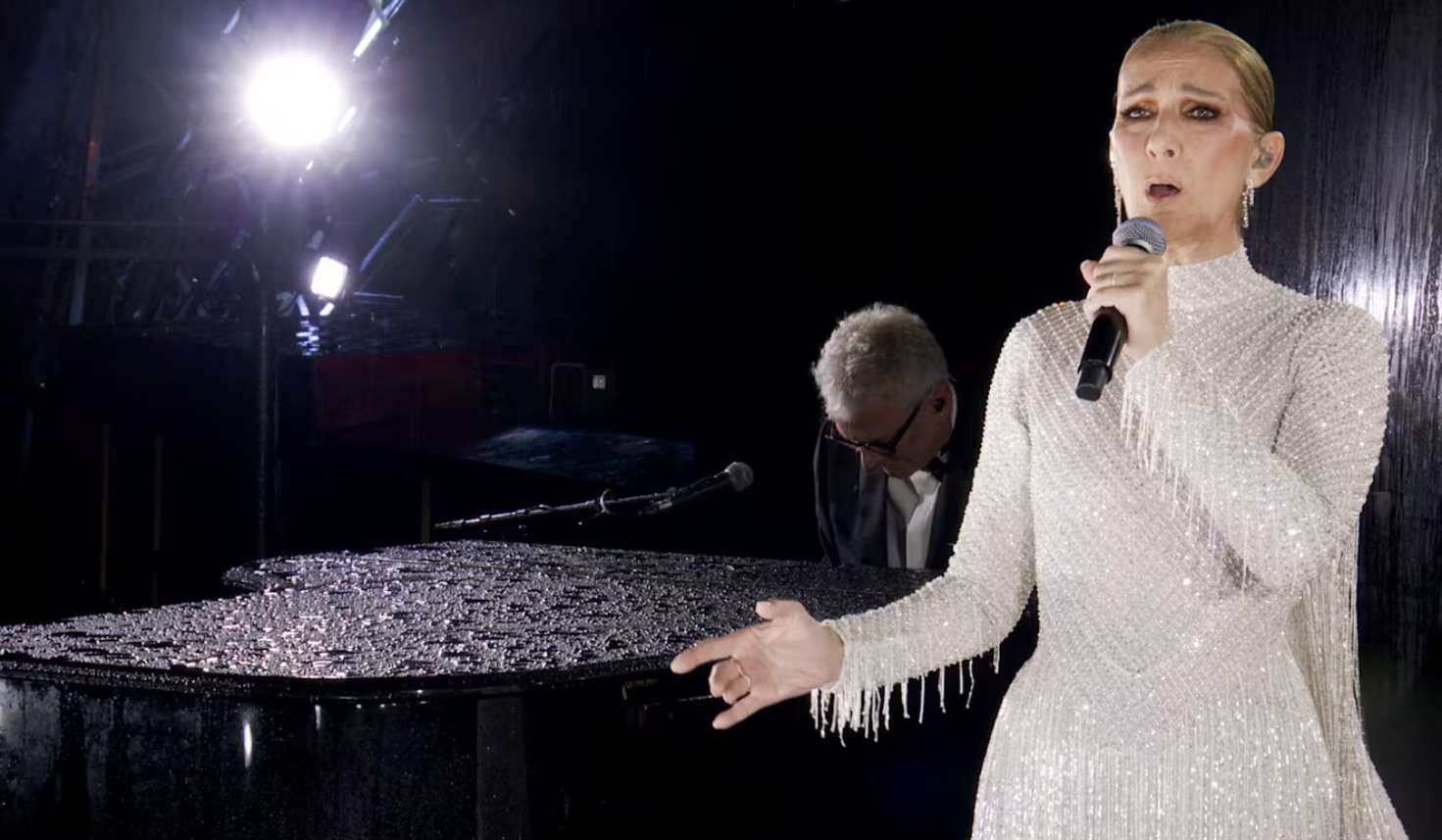
Celine Dion is one of the most powerful and recognizable voices in modern popular music. Her career is built on rare vocal discipline, emotional intensity, international reach, and a connection with audiences that has lasted for decades. She is often associated with grand ballads, dramatic performances, and songs that turn private feeling into global memory. Few singers have managed to move so naturally between languages, markets, and generations.
Born in Charlemagne, Quebec, in 1968, Dion grew up as the youngest child in a large musical family. Music was not simply a profession waiting for her; it was part of the atmosphere of her childhood. Her family performed together, and from an early age she showed extraordinary vocal ability. Her rise began in French-language music, where she became a young star in Quebec before the rest of the world knew her name.
A key figure in her early life and career was René Angélil, who became her manager and later her husband. He believed deeply in her talent and helped guide her transition from local prodigy to international artist. That transition was not simple. Dion had to move from French-speaking audiences into the English-language global pop market, while preserving the dramatic sincerity that made her distinctive.
Her international breakthrough came through a combination of vocal power, carefully chosen songs, and an ability to perform emotion with complete commitment. Dion did not become famous by appearing casual or understated. Her greatness lies in the opposite direction: she embraces the full scale of feeling. When she sings a ballad, the song becomes almost cinematic. Her voice can move from softness to force with extraordinary control, making listeners feel that every note is part of a larger emotional story.
During the 1990s, Celine Dion became one of the defining voices of global pop. Albums such as The Colour of My Love, Falling into You, and Let’s Talk About Love established her as a superstar. Songs like “The Power of Love,” “Because You Loved Me,” “It’s All Coming Back to Me Now,” and “My Heart Will Go On” became part of the emotional soundtrack of the decade. Her official biography notes that she was born in Charlemagne, Quebec, as the 14th child in her family, while her wider career made her one of Canada’s most internationally successful recording artists.
“My Heart Will Go On,” the theme from Titanic, became one of the most famous songs in film and pop history. Its success showed Dion’s unique ability to make a song feel larger than the moment in which it was released. For many people, the song is inseparable from memory, romance, loss, and the cultural phenomenon of the film itself. It also confirmed Dion’s position as a singer whose voice could carry enormous emotional symbolism.
Her Las Vegas residencies were another major chapter in her career. At a time when some people still saw Las Vegas residencies as a sign of artistic decline, Dion helped transform the format into a prestigious and commercially powerful model for major stars. Her performances combined theatrical staging with vocal consistency and helped create a path later followed by many other global artists.
What makes Celine Dion especially important is not only the size of her voice, but the discipline behind it. Her singing is technically demanding, but it rarely feels cold. She has a gift for making precision sound emotional. She can hold long notes, control vibrato, and move through difficult melodies while still giving the impression of vulnerability. That combination of control and feeling is central to her appeal.
Her public life has also been marked by personal loss and resilience. The death of René Angélil in 2016 was a profound turning point, both personally and professionally. Dion continued to perform and appear publicly, but her image increasingly reflected not only glamour and vocal strength, but also endurance. In later years, her diagnosis with stiff-person syndrome brought new attention to the physical demands of singing and performance. The diagnosis also reminded audiences that a voice so often described as superhuman still belongs to a human body.
Celine Dion’s influence extends beyond music into fashion, performance, and celebrity culture. Her later public image became more playful and experimental, especially through fashion. Stylists and designers have often spoken about her eye for detail and her professionalism. Recent coverage of stylist Law Roach, for example, has described how working with Dion sharpened his attention to tailoring and presentation, reinforcing her reputation as an artist deeply involved in the details of her image.
Her legacy is multilingual and international. She is not only a Canadian star, not only a French-language singer, and not only an English-language pop icon. She belongs to several musical worlds at once. That is one of the reasons her career has been so durable. She can be understood as a Quebec artist, a global balladeer, a Las Vegas pioneer, a fashion figure, and one of the great vocal technicians of modern pop.
In the end, Celine Dion’s career is a story about voice as destiny. Her voice carried her from a small town in Quebec to the largest stages in the world. It carried love songs, film anthems, grief, strength, and spectacle. Her importance lies not only in records sold or awards won, but in the way her performances became attached to people’s private memories. Celine Dion is not simply a singer of big songs. She is an artist who made big emotions feel universal.